
Observing the Seasons
Orienting our Life Rhythms around the Death and Life of Christ
The Church Calendar
Observing the Church calendar is a lot like water running over rocks–slowly but perceptibly, it changes the topography of our hearts.
We follow the Church calendar in our Sunday gatherings, especially in our prayers and by preaching through the Lectionary; in our Table Groups; in the Events we host; and through Seasonal Resources where we incorporate practices in our Rule of Life to help us internalize each season.

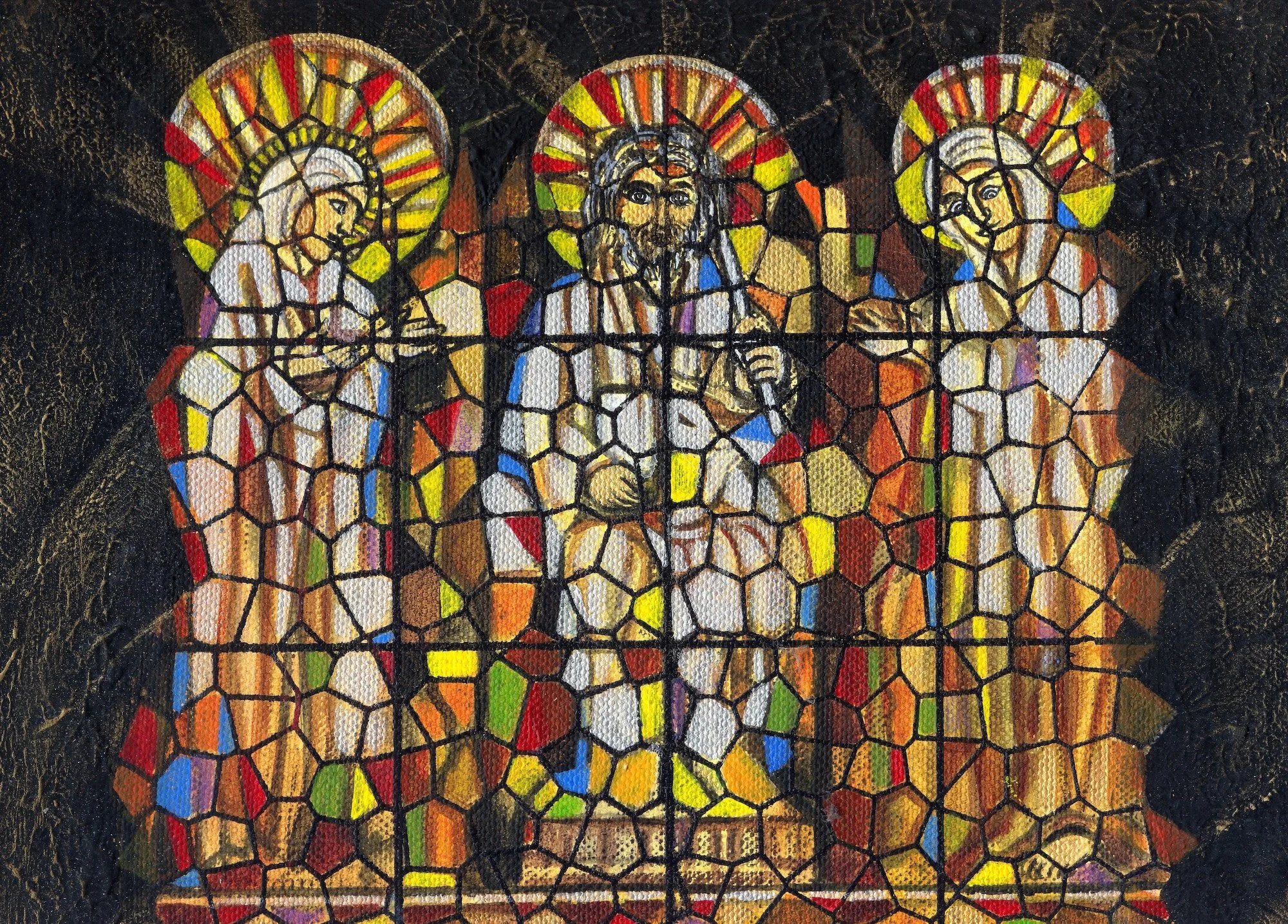
The Church calendar is something that invites us to participate in the fullness of Christ’s life and the Church’s response. We all naturally gravitate towards certain ways of expressing our faith–places we feel comfortable. Some may be naturally drawn to feasting, others to fasting. Some of us are great at introspection, others want to gather around a table or serve.
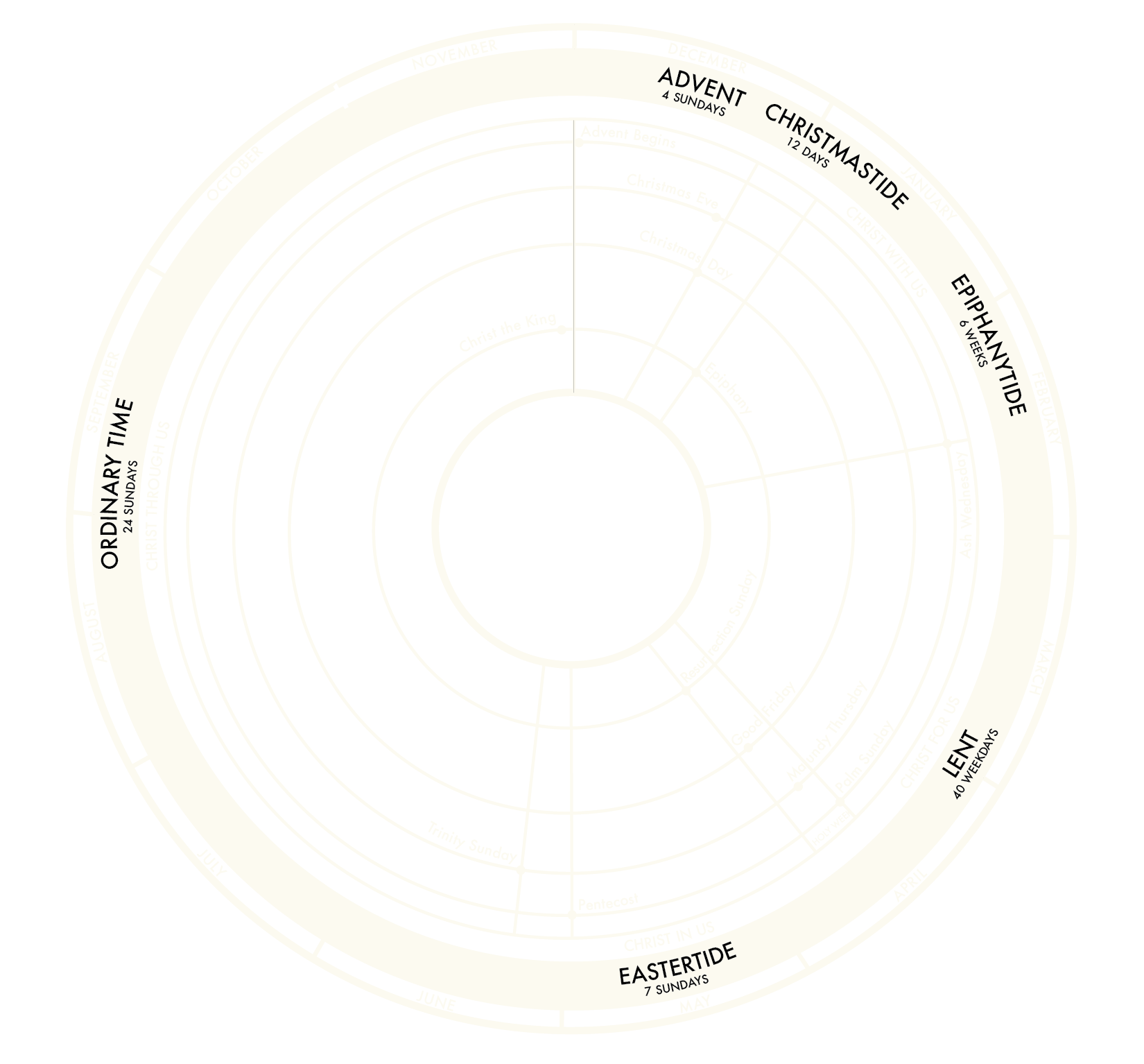
By observing the Church calendar, we aim for a more holistic apprenticeship to Jesus by allowing ourselves to be carried into emphases of our faith and practices that may not feel native to us, but are powerful for helping us grow.
Church Calendar artwork by Parishioner Hartley Blessing
The Liturgical Year
-
Advent, which always begins 4 Sundays before Christmas, starts the church year with a season of longing, anticipation and waiting for the Advent (arrival) of our Lord Jesus Christ.
-
Christmas is the feast of the nativity–our remembrance that Jesus came into the world as a meek, humble infant. We celebrate the season of Christmastide with 12 days of feasting, marking each day of the season with celebration.
-
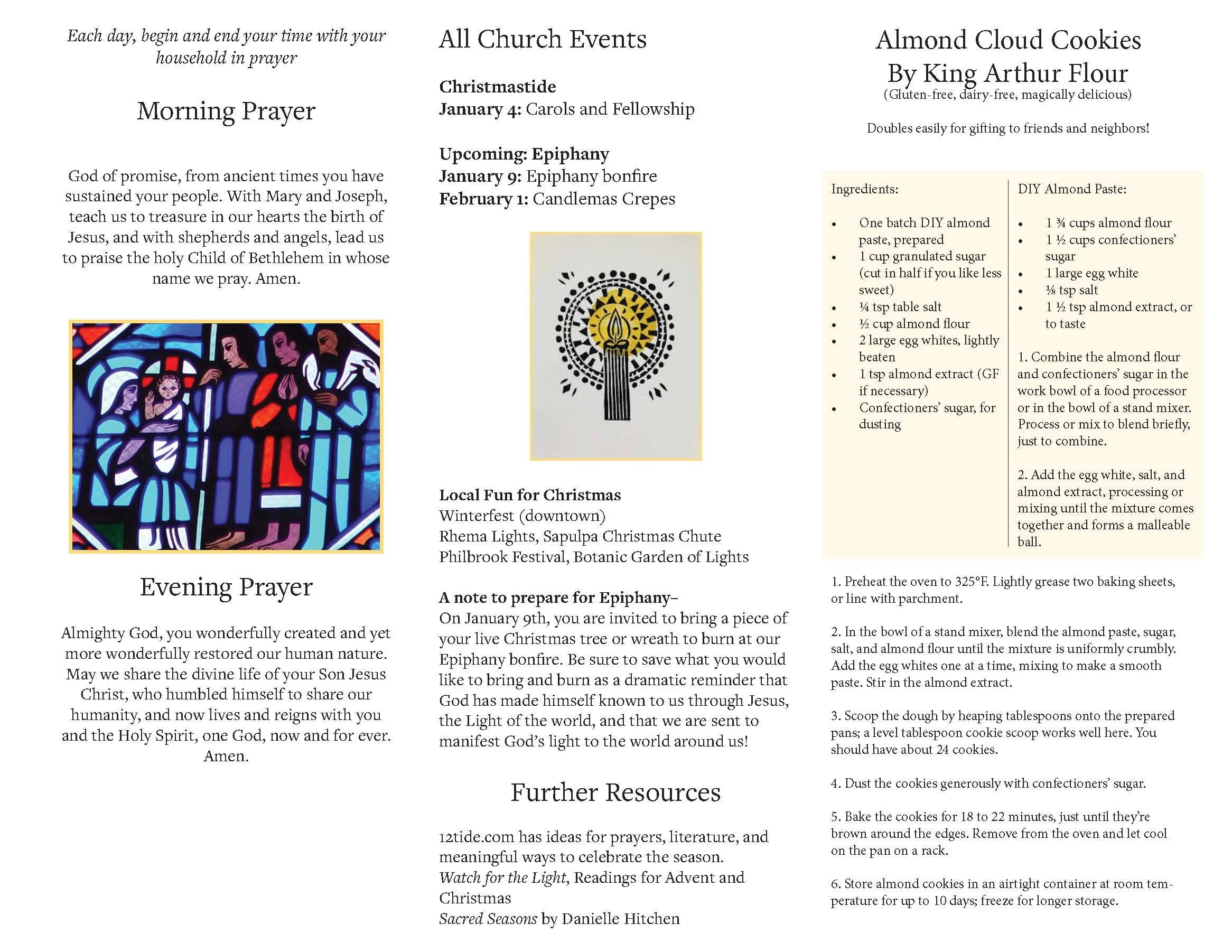
The feast of the Epiphany, observed on January 6, commemorates the wise men from the East who came to worship Christ as King. It is a reminder to us that the gospel is for all peoples, and that Christ came into the world for the good of even those who seem far off.
-
In Lent, the major penitential season of the church calendar, God draws near to us in our sin. Lent is a 40 day period in advance of Easter for fasting, prayer, and giving to the poor.
-
He is risen! He is risen indeed! Easter, which is linked to the timing of the Passover, commemorates Christ’s resurrection, not just as a past tense event, but as a present reality. And while the Church fasts for 40 days in Lent, we feast for 50 days in Eastertide!
-
The longest season of the Church calendar, Ordinary Time is a season of growth. The majority of the Christian life is lived in this season–a time of planting, pruning, watering, and waiting on the Lord to produce growth in us.

Advent
A Season of Longing
Advent, which always begins 4 Sundays before Christmas, starts the church year with a season of longing, anticipation and waiting for the Advent (arrival) of our Lord Jesus Christ. Though the advent that comes to mind most readily is the birth of Jesus, celebrated at Christmas, we really observe an advent of three parts. We remember that Jesus has come in his incarnation. We remember that Jesus will come, when he returns to make all things new. We remember that Jesus is already come in his body, the Church, which currently ministers under his authority.
Themes of the Advent season include, longing, waiting, hope, and light in the darkness. The color of the season is purple, a sign of repentance before the presence of royalty. Practices such as lighting candles on an Advent Wreath or fasting in anticipation for the arrival of Jesus are characteristic of the season.
Check out our most recent Advent Seasonal Guide to see more ways to incorporate the rhythms of the season into your life.

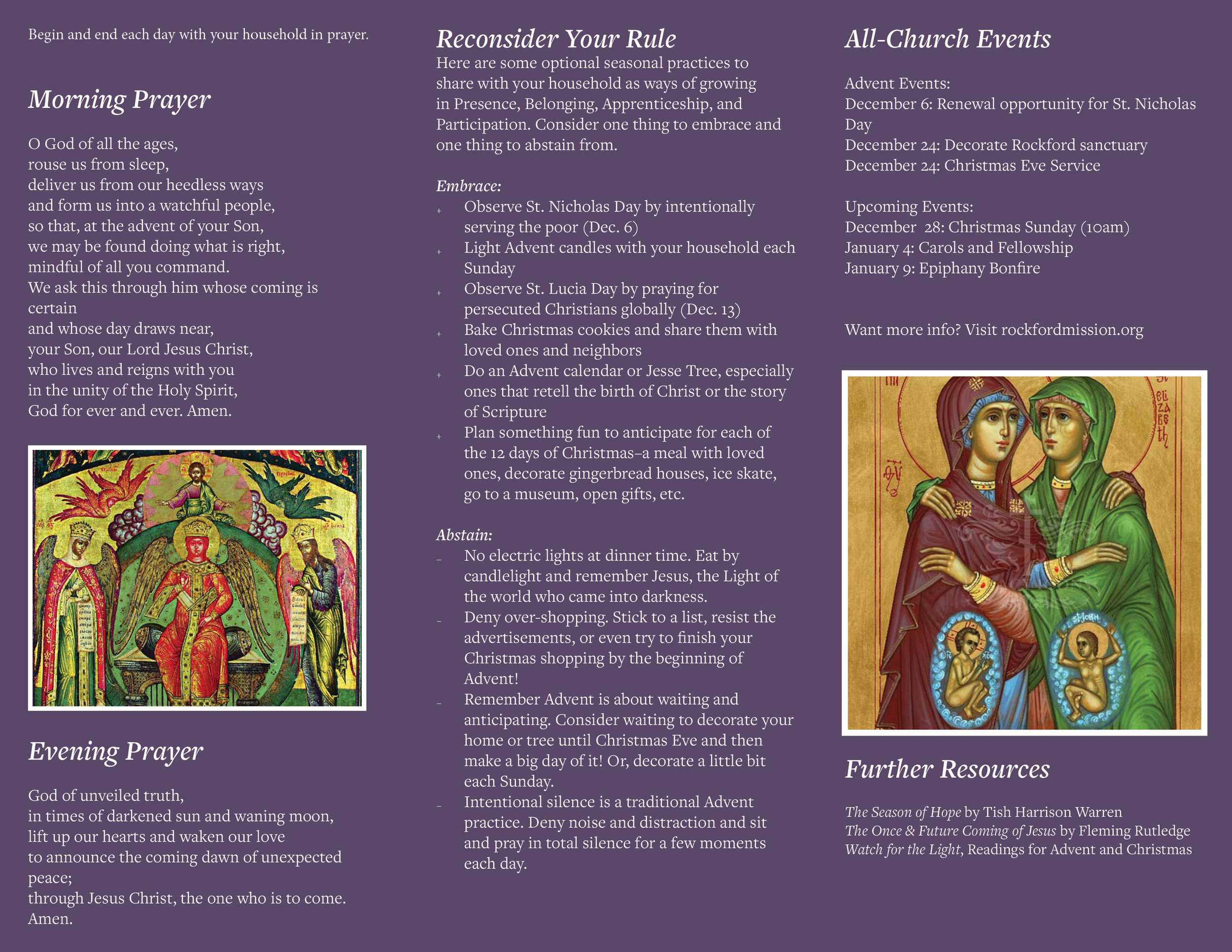
Christmastide
Christmas is the feast of the nativity–our remembrance that Jesus came into the world as a meek, humble infant. He assumed humanity in order that he might redeem humanity. We celebrate the season of Christmastide with 12 days of feasting, marking each day of the season with celebration. The color of the season is white, a sign of purity and light at the dawning of our savior. Because Christ has come into the world, we have cause to celebrate, for in our need, God has drawn near.
Check out our most recent Christmas Seasonal Guide to see more ways to incorporate the rhythms of the season into your life.
Christmas may feel like it needs no explanation (did you know it’s celebrated on December 25th?!), and in some ways that’s true! The whole world, it seems, regardless of if they would acknowledge Jesus as their Lord and Savior, longs for a moment of joy and celebration in the midst of winter’s darkness.
A Season of Celebration and Feasting
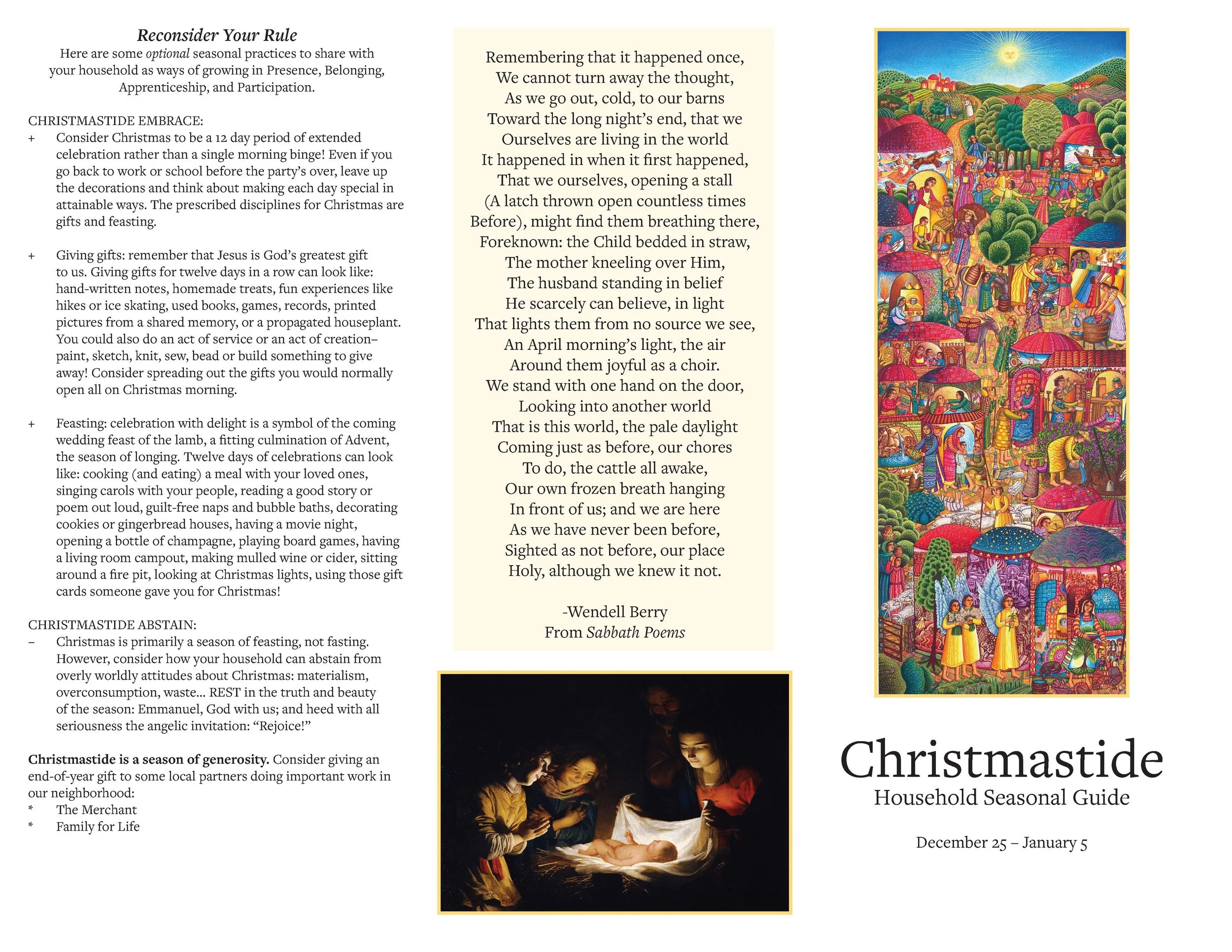

Epiphany
A Season of New Beginnings
The feast of the Epiphany, observed on January 6, commemorates the wise men from the East who came to worship Christ as King. It is a reminder to us that the gospel is for all peoples, and that Christ came into the world for the good of even those who seem far off. Historically, people have marked the day by burning their Christmas trees to declare: Jesus is the light of the world, good news for all humanity!
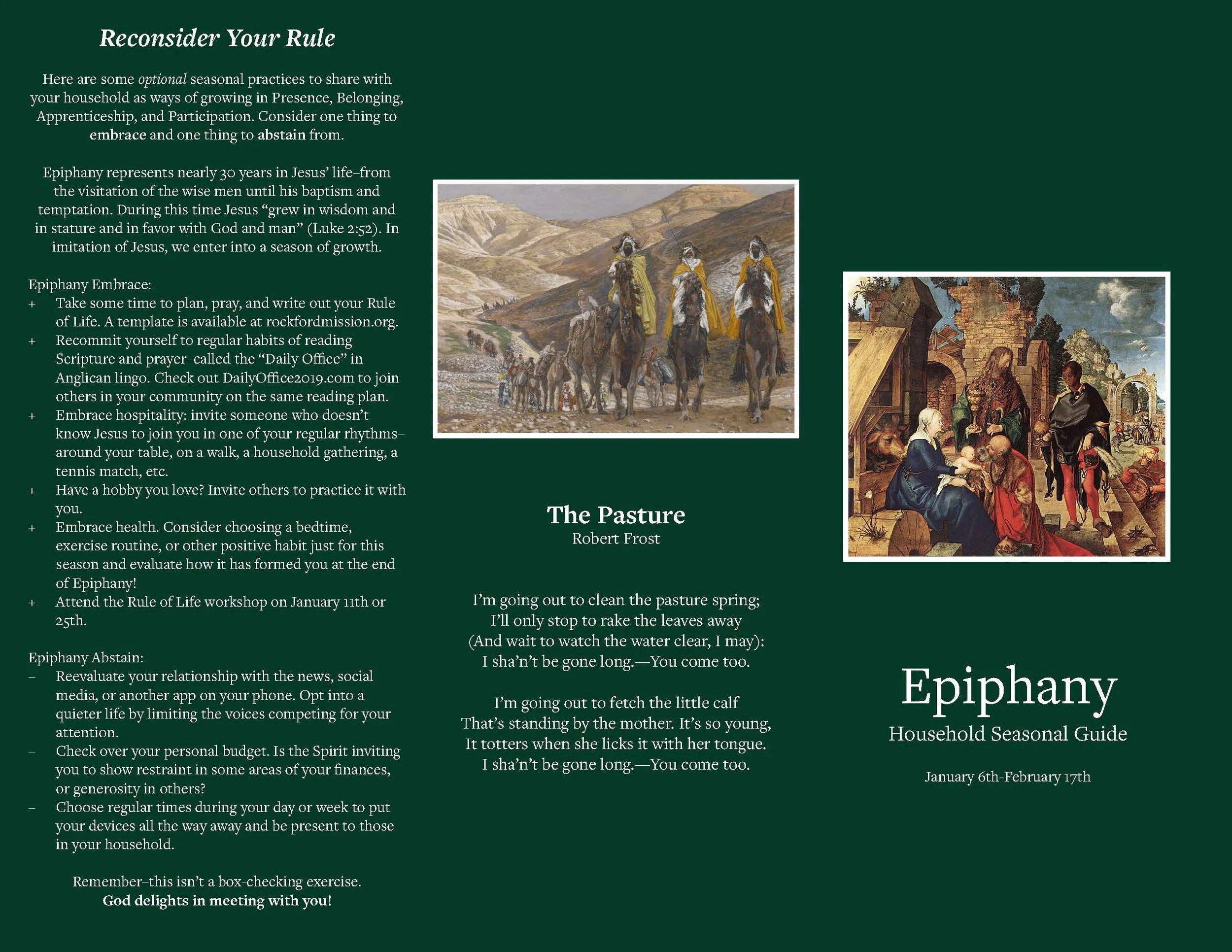
Epiphany begins a season marked by new beginnings–its color is green, a symbol of growth and life. In this season, we consider how Jesus came into the world as an infant who needed to grow into the man who would conduct his public ministry. We, too, must grow in Christ, making choices and commitments to apprentice ourselves to Jesus. Therefore, Epiphany serves as a great time to reconsider your Rule of Life to see how you might abide in Christ.
Check out our most recent Epiphany Seasonal Guide to see more ways to incorporate the rhythms of the season into your life.
Lent
A Season of Learning Penitence
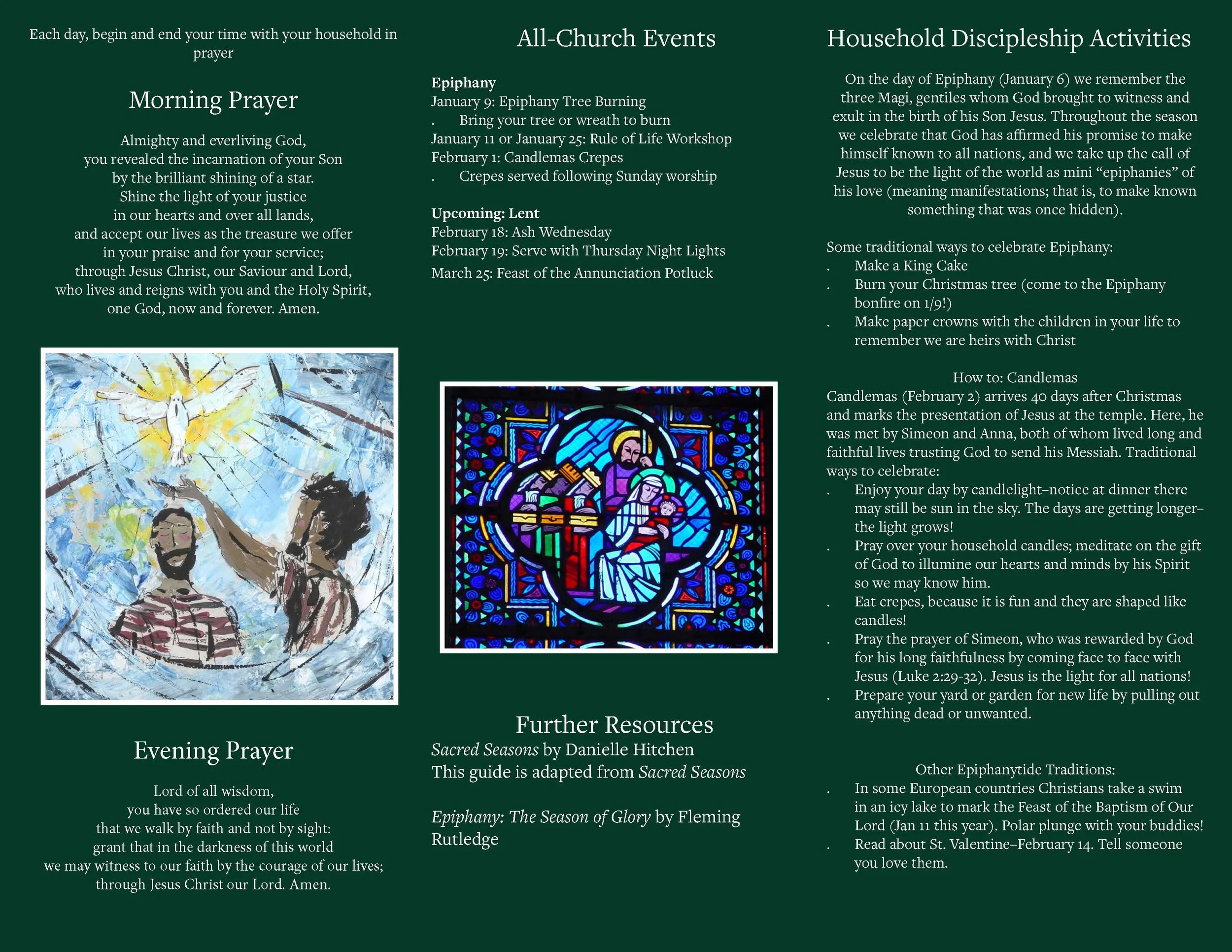
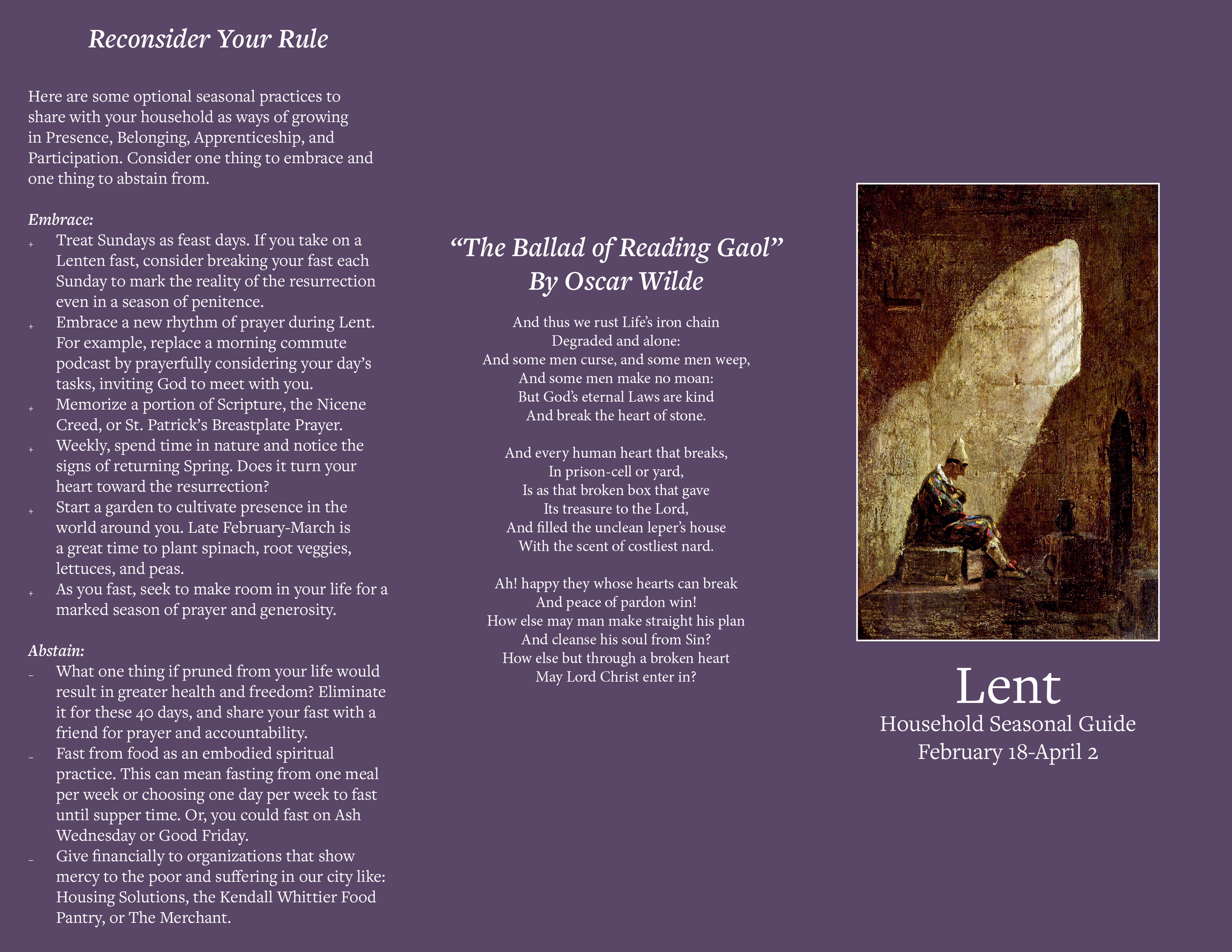
In Lent, the major penitential season of the church calendar, God draws near to us in our sin. Its color is purple, a symbol of repentance before the coming of the King on Easter Sunday. Lent is a time of examination and introspection. Historically, the Church preferred to baptize new converts on Easter Sunday. Lent began as a 40 day period in advance of Easter to prepare these baptismal candidates for the promises they would make in their baptismal vows.
The traditional practices of lent are fasting, prayer, and giving to the poor. The number 40 is a helpful picture of what Lent represents in the Church’s life–as Israel wandered in the wilderness for 40 years; as Jesus endured the wilderness for 40 days, so the church endures 40 days of longing. God leads his Church into the wilderness for a time of reflecting on our sin, though not without hope. All of Lent points towards the coming of Easter Sunday–each Sunday in Lent serves as an opportunity to break from our fasts, remembering that each Sunday is an opportunity to celebrate the resurrection.
Check out our most recent Lent Seasonal Guide to see more ways to incorporate the rhythms of the season into your life.
Eastertide
A Season of Resurrection
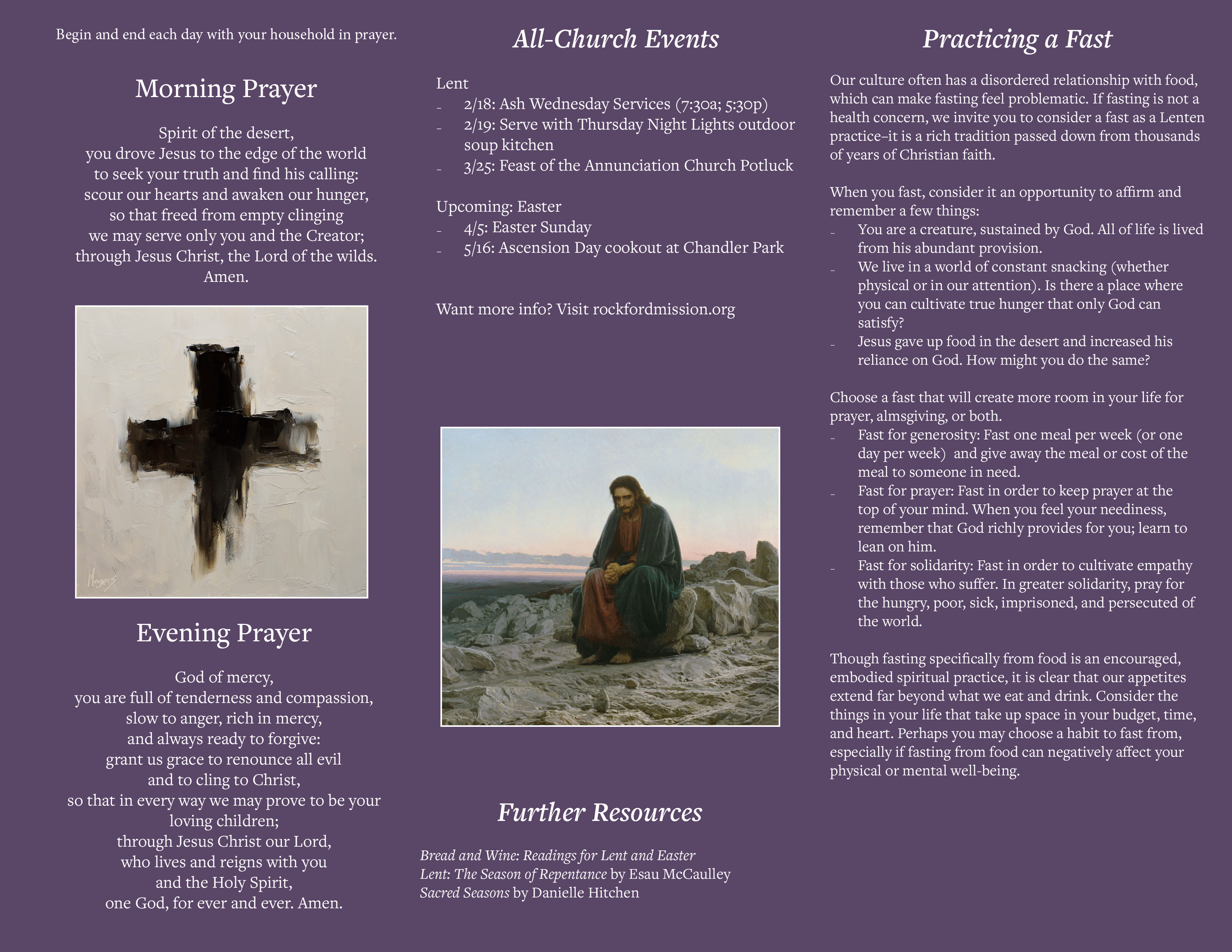
He is risen! He is risen indeed! This cry is not just a way to get a room of chatty Christians to listen to you on a Sunday morning, it is the central cry of the Christian life. Easter, which is linked to the timing of the Passover, commemorates Christ’s resurrection, not just as a past tense event, but as a present reality. And while the Church fasts for 40 days in Lent, we feast for 50 days in Eastertide!
Eastertide’s color is white, a symbol of hope, renewal, and victory over the darkness of sin. It is a season of joy, marked by celebrations around the table. A fun challenge for some in Easter is to consider–if I was able to fast from something during Lent, what might I feast on during Easter that would not serve as an idol to me, but instead would help me remember how good God has been to me?
Check out our most recent Easter Seasonal Guide to see more ways to incorporate the rhythms of the season into your life.
Ordinary Time
A Season of Growth
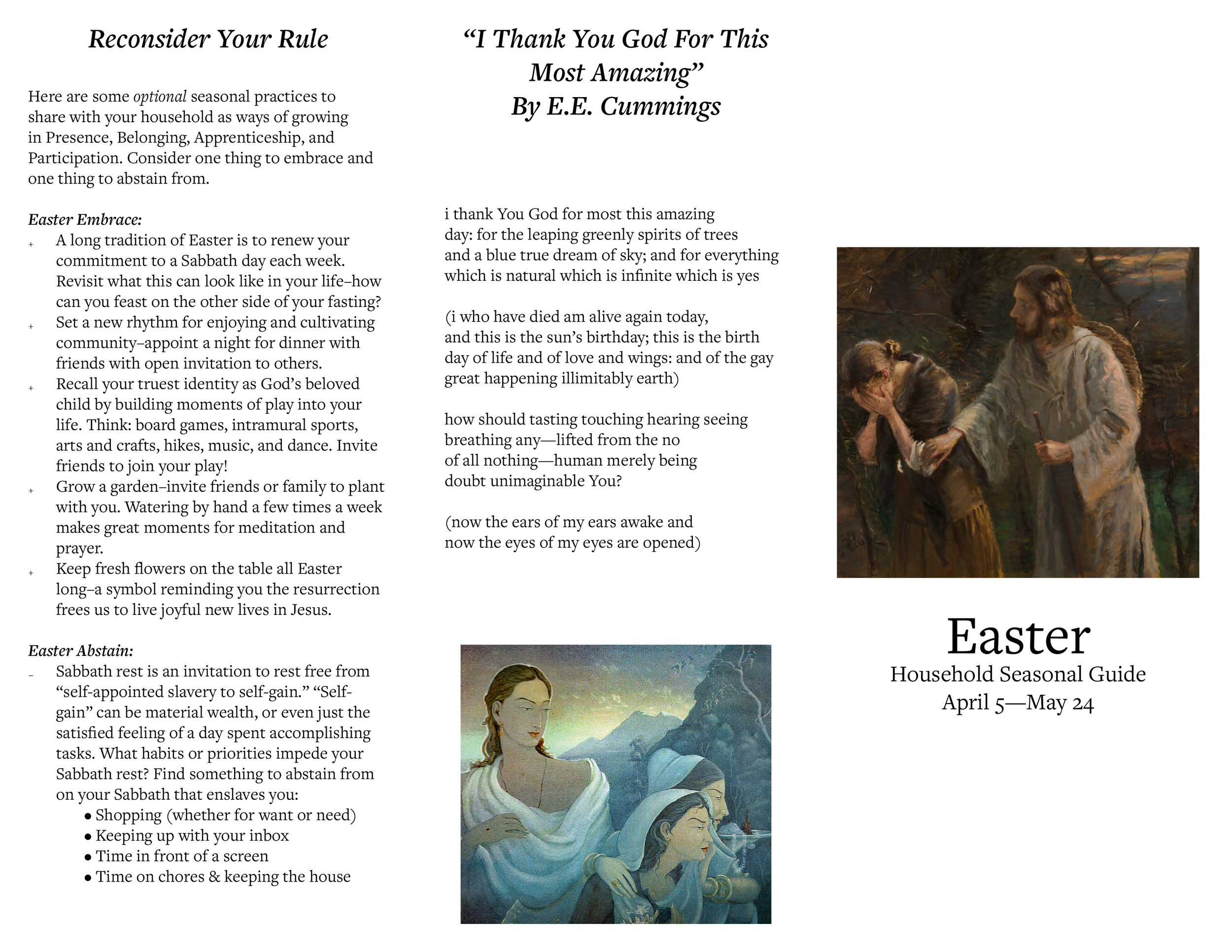
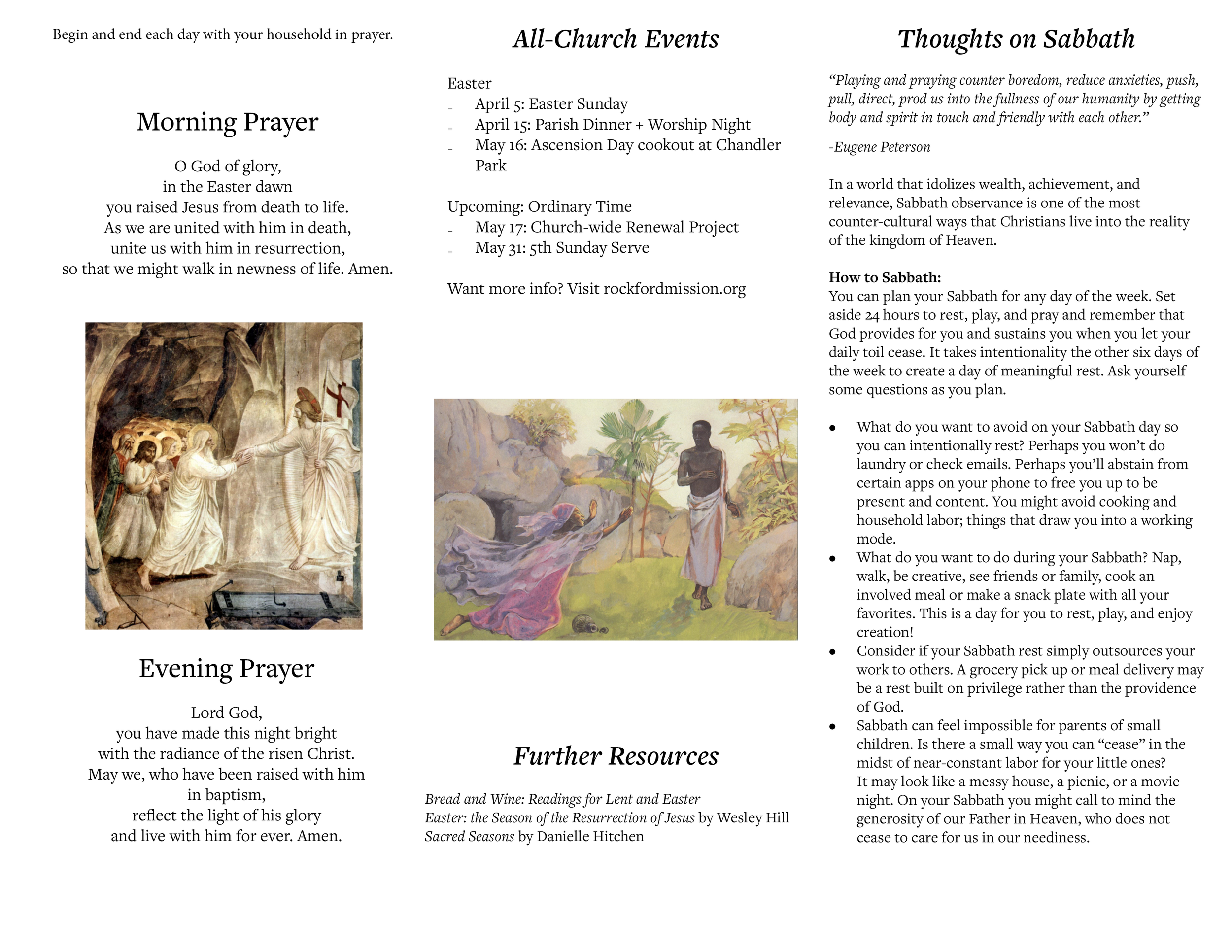
The longest season of the Church calendar, Ordinary Time (which refers to ordered time, time counted after Pentecost, which comes 50 days after Easter) is again marked by the color green. It is a season of growth. The majority of the Christian life is lived in this season–a time of planting, pruning, watering, and waiting on the Lord to produce growth in us.
Ordinary Time is punctuated by a number of feast days throughout–periodic calls to remember the hope of the resurrection, but its most notable character is that God is active in real, even if seemingly small, ways while we continue our life in Christ. We entrust ourselves to him for growth by intentionally minding our habits in community, believing Jesus’ words in John 15–he is the vine, we are the branches, and if we remain in him, we will bear much fruit.
Because this is such a long season, we have broken up our seasonal guides into three pieces: fallow; planting; pruning. Check out our Ordinary Time Guides to see more ways to incorporate the rhythms of the season into your life.
The Rockford Mission is a plant of Cornerstone Tulsa. We are a part of Churches for the Sake of Others (C4SO), which is built on five key values: Kingdom, Spirit, Formation, Mission, and Sacrament.